Orthodontics
Broken Braces or a Sharp Wire in Mohali: Contacting Your Orthodontist
Alignora Smiles Dental & Orthodontic Clinic · 15 November 2026 · 3 min read
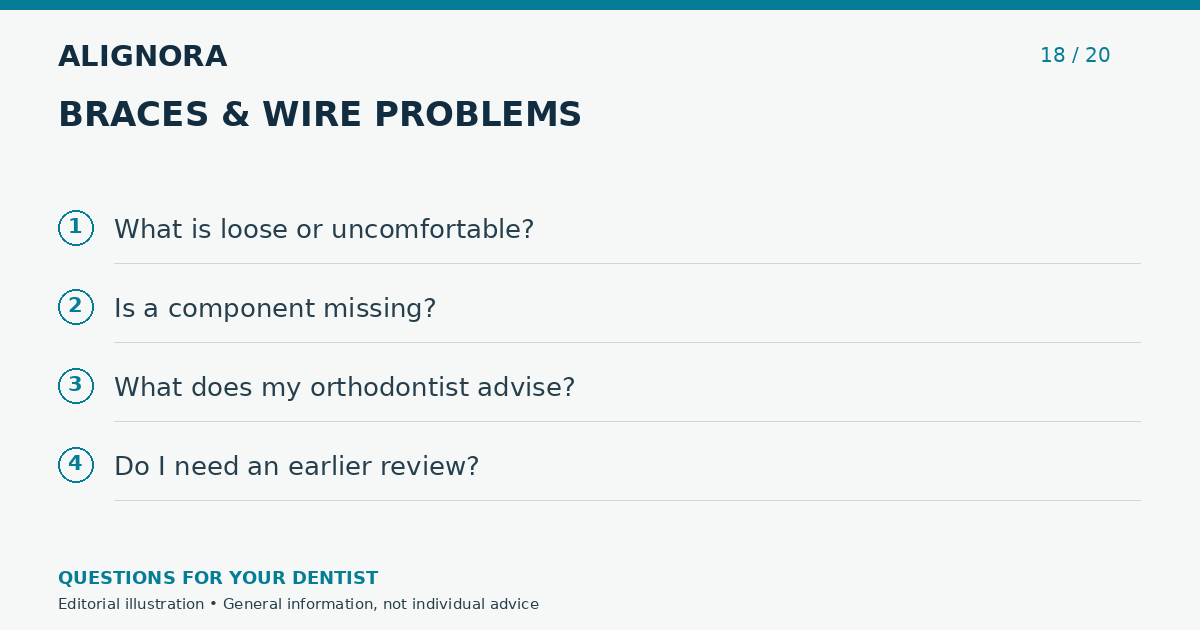
A loose bracket or sharp wire is a reason to contact your treating orthodontist for advice. Do not try to decide from a blog whether it can safely wait until your next visit. For patients in Mohali, the useful first step is to describe the problem, symptoms and appliance rather than attempting a repair without individual instructions.
Explain what changed
Tell the clinic whether a bracket, wire, band or retainer seems loose, whether there is rubbing or injury, and whether you can close your mouth comfortably. Note when it happened and whether a piece is missing. You do not need to identify every appliance component correctly to ask for help.
The American Association of Orthodontists lists a loose or broken bracket, a poking or loose wire, a loose band or appliance, and a lost or damaged aligner or retainer as problems your orthodontist needs to know about. Most are uncomfortable rather than dangerous, but they can still affect treatment progress, so tell the clinic instead of waiting silently for your next visit.
When medical help takes priority
If a component may have been inhaled, or there is difficulty breathing, seek urgent medical attention. Heavy or uncontrolled bleeding, a suspected broken jaw or facial injury, a knocked-out permanent tooth, or swelling that affects breathing or swallowing also needs emergency care: go to the nearest hospital emergency department or call 112 (India’s emergency number). Do not wait for a routine appointment-form reply in these situations.
Otherwise, call the treating clinic and ask what to do until assessment. Do not cut wires, glue brackets or alter the appliance based on this article. If a bracket is loose but still attached to the wire, leave it in place; if your orthodontist has given you orthodontic wax, a small piece pressed over a rubbing bracket or wire can cushion it until you are seen. Whether temporary comfort measures are appropriate should be discussed with the clinician who knows your treatment.
Information to have ready
- What type of appliance are you wearing?
- What feels loose, sharp or uncomfortable?
- Is there bleeding, injury, swelling or significant pain?
- Is a component missing, and could it have been swallowed or inhaled?
- When is your next scheduled review?
- How can the treating clinic contact you?
Ask how to share a photograph if the orthodontist requests one; do not post identifiable clinical images publicly. A photograph may help the conversation but cannot establish every issue with fit or injury.
Agree the next step clearly
Ask whether a review is needed sooner, how to manage eating and cleaning, and what worsening symptoms mean. If you are wearing a removable appliance, obtain specific instructions rather than guessing whether to continue or stop. Keep the advice with your treatment records.
For clinic service information, read braces and the braces specialist page. Call +91 9872036879 for Alignora availability. If you are being treated elsewhere, your own orthodontist should usually be the first contact about that appliance. Online appointment requests do not provide immediate clinical advice or a confirmed emergency slot.
Related reading: Dental Emergencies in Sector 126: Getting the Right Help and How to Care for Your Teeth While Wearing Braces.
This is general information for a conversation with a dentist, not an individual diagnosis or treatment recommendation.
This article is general educational information about dental and orthodontic care. It is not a diagnosis and does not replace a clinical assessment or personalised advice from a qualified clinician.