Living with Braces
How to Care for Your Teeth While Wearing Braces
Alignora Dental Team · 2 March 2026 · 7 min read
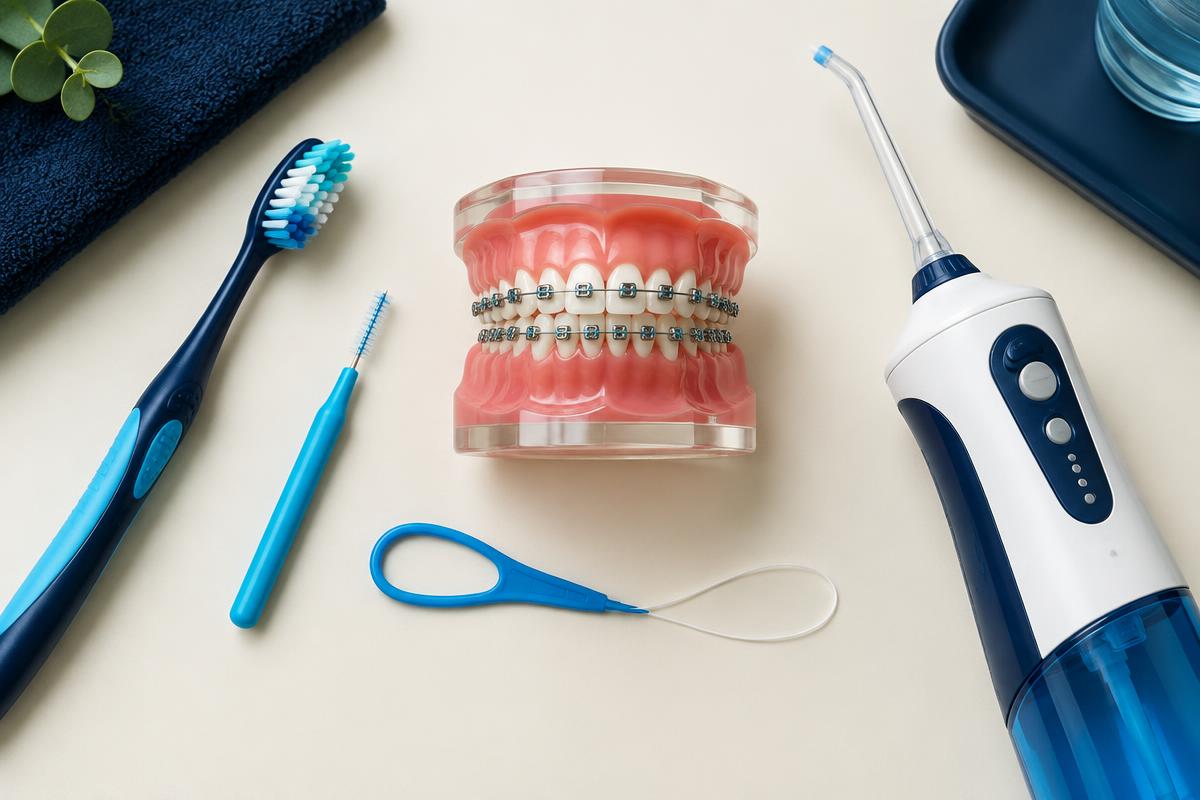
Brackets and wires do not cause dental problems by themselves. What causes problems is plaque that collects around them and is not removed. The good news is that the solution is entirely practical, and it becomes routine within a couple of weeks.
A daily routine that works
- Brush thoroughly at least twice a day, with extra attention where the bracket meets the tooth.
- Angle the brush toward the gumline as well as above and below each bracket.
- Use an interdental or single-tufted brush to reach beneath the wire.
- Clean between the teeth daily using the method your clinician recommends.
- Use any fluoride products your dentist or orthodontist has advised.
- Rinse after meals when brushing is not possible.
The area most often missed is the small triangle between the bracket and the gum. It is worth checking that spot deliberately in the mirror.
Foods to avoid
- Hard foods: nuts, ice, hard boiled sweets, crusty bread
- Sticky foods: toffee, chewing gum, chewy caramel
- Whole hard fruit and raw vegetables — cut them into pieces instead
- Frequent sugary drinks, which raise the risk of decay around brackets
Managing discomfort
Tenderness after fitting or an adjustment is common and usually settles within a few days. Softer foods help during that period. If a bracket or wire is irritating your cheek, orthodontic wax can provide relief until the clinic can see you. Follow the specific advice your orthodontist gives you.
If something breaks
Contact the clinic and describe what has happened. Do not attempt to cut a wire yourself. A loose bracket left unrepaired means that tooth is not being moved as planned, which is a common and entirely avoidable cause of delay.
Keep seeing your general dentist
Orthodontic reviews are not a substitute for routine dental check-ups. Continue seeing your general dentist throughout treatment so that decay and gum health are monitored independently.
Sport and music
A mouthguard is commonly recommended for contact sport while wearing braces. Wind instrument players usually adapt within a few weeks; mention it at your consultation so it can be discussed.
This article is general educational information about dental and orthodontic care. It is not a diagnosis and does not replace a clinical assessment or personalised advice from a qualified clinician.