Getting Started
What Happens During Your First Orthodontic Consultation?
Alignora Dental Team · 16 February 2026 · 6 min read
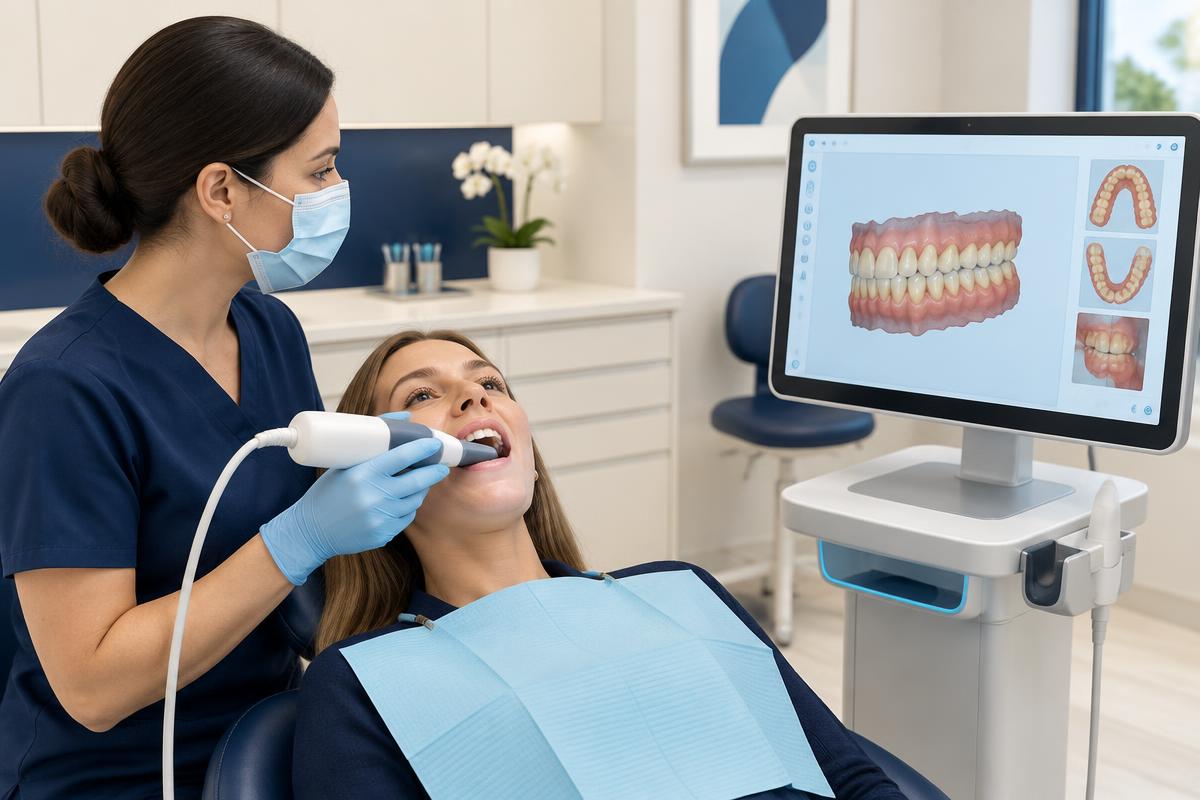
A first orthodontic consultation is often shorter and simpler than people imagine. Its purpose is diagnostic and educational: to work out what is going on, and to explain it clearly enough that you can decide what to do next.
Step one: the conversation
It usually begins with you talking. What have you noticed? What bothers you? Is it appearance, function, or a comment from your dentist? This matters clinically — two patients with similar teeth may have entirely different priorities, and treatment planning should reflect that.
Step two: the examination
The orthodontist examines the teeth, gums and soft tissues, then looks at how the upper and lower teeth meet. They will check for crowding, spacing, rotations and bite relationships, and note anything that would need attention before orthodontic treatment could begin.
Step three: records, if needed
Accurate planning may require clinical records. These build a complete picture of tooth position and the underlying structures, so that movement can be planned rather than improvised. Your orthodontist will explain what is needed and why.
Step four: the explanation
You should be told what has been found, what could be changed, what options exist and what each would involve. A good explanation includes limitations: what treatment will not fix, and what would require a different approach.
Step five: your questions
- What is the main problem you are proposing to correct?
- What options are suitable, and which would you recommend?
- What is involved day to day?
- What happens if I decide to do nothing?
- What will retention involve afterwards?
What will not happen
No appliance is fitted at a first consultation, and you should not be asked to decide on the spot. Treatment planning requires the records and consideration that follow the appointment.
Bringing a child
For children, the first visit is deliberately low-key. Nothing uncomfortable happens, and the main aim is for the child to feel at ease. Parents are welcome to ask everything they need to; children often ask the most practical questions of all.
This article is general educational information about dental and orthodontic care. It is not a diagnosis and does not replace a clinical assessment or personalised advice from a qualified clinician.