Dental care
After a Tooth Extraction: Understanding Your Aftercare Plan
Alignora Smiles Dental & Orthodontic Clinic · 15 November 2026 · 4 min read
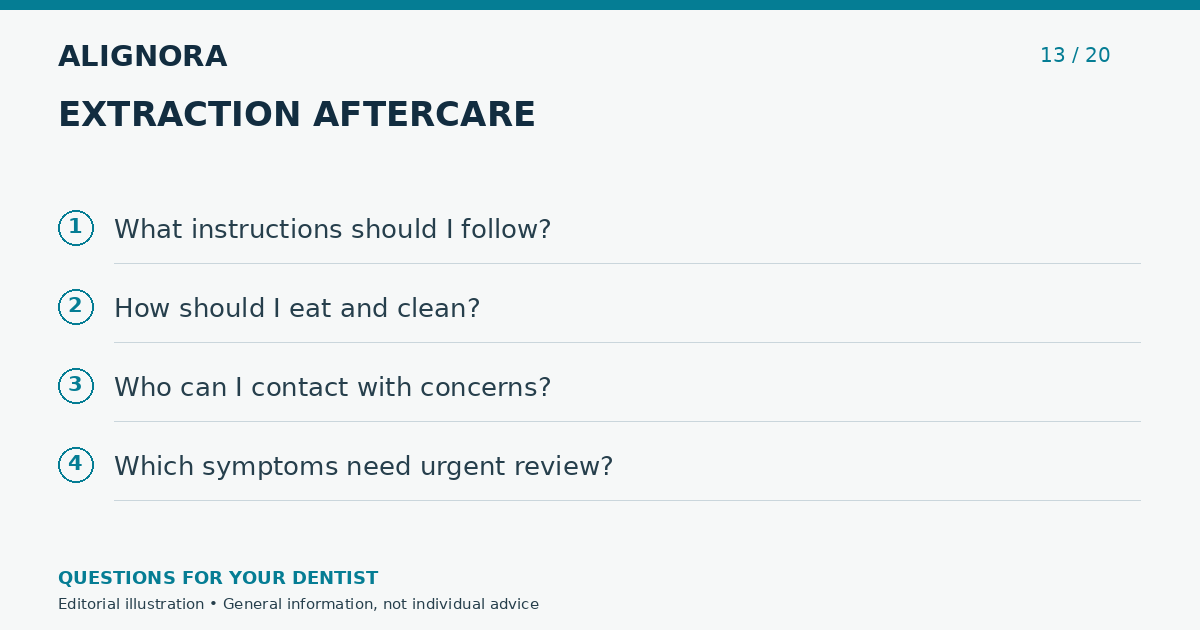
After a tooth extraction, your dentist’s written instructions should guide recovery. This article helps you check the plan before leaving the clinic and know what to ask if something is unclear. It does not prescribe a medicine, provide a universal healing deadline or decide whether your symptoms are safe to ignore.
Leave with instructions you understand
Ask what was done, whether stitches were placed, what care is needed and whom to contact. If you had sedation or another anaesthetic arrangement, clarify any activity, driving or supervision restrictions directly. Tell the dentist if you may struggle to follow instructions because of work, caregiving or travel.
University College London Hospitals’ extraction leaflet explains the importance of avoiding disturbance to the blood clot in the socket and following aftercare. Its contact numbers are for that hospital’s patients; your own dentist’s written instructions take priority.
Ask about eating and mouth care
Before you leave, confirm when you may eat or drink, how to avoid injury while your mouth is numb, and how to clean around the area. Ask when rinsing is appropriate and what to avoid. Do not aggressively rinse, probe the socket or apply household substances while attempting to speed healing.
Check that you understand any instructions about tobacco, exercise and diet. If you have difficulty eating or following the plan, contact the clinic for advice rather than making a change based on a social-media post.
Medicines need individual instructions
If medication is prescribed or recommended, ask about the dose, duration, interactions and what to do if you have a reaction. Tell the clinician about allergies and all medicines you already take. Do not stop blood-thinning medication or other prescribed treatment because of a general aftercare article; decisions need the relevant treating professionals.
Know when to call again
- What amount of bleeding or discomfort should prompt a call?
- What should I do if bleeding continues?
- Which changes in swelling, pain or temperature need review?
- Whom can I contact if the clinic is closed?
- Is a follow-up appointment required, and when?
If the socket keeps bleeding
Some blood-stained saliva is common for a short time after an extraction. For thicker, ongoing bleeding, the UCLH leaflet describes gently rinsing, rolling clean gauze (or a clean cotton handkerchief) into a pad, placing it over the socket and biting firmly for 30 minutes, repeating once if it is still bleeding, and contacting the treating team if bleeding continues after an hour of firm pressure. Follow your own dentist’s timings where they differ.
Bleeding that is heavy, fills the mouth quickly, or comes with dizziness, faintness or breathing difficulty needs emergency medical care: go to the nearest hospital emergency department or call 112 (India’s emergency number). Difficulty breathing or swallowing with swelling also requires emergency care. Worsening pain, swelling or a raised temperature in the days after the extraction warrants a call to the dentist. A routine website request is not an appropriate way to wait for urgent triage.
Keep the next step clear
If your tooth was removed at another clinic, contact that treating team about the procedure and aftercare when possible; they know what was done. If you cannot reach them about an urgent concern, seek appropriate dental or medical assessment elsewhere.
For routine assessment availability in Sector 126, read Alignora’s emergency dental information and dental check-up information. Call +91 9872036879 or request a visit; online requests are not confirmed appointments or immediate clinical advice.
Related reading: Wisdom Tooth Assessment in Mohali: Questions Before Removal and Dental Emergencies in Sector 126: Getting the Right Help.
This is general information for a conversation with a dentist, not an individual diagnosis or treatment recommendation.
This article is general educational information about dental and orthodontic care. It is not a diagnosis and does not replace a clinical assessment or personalised advice from a qualified clinician.