Braces
How Do Braces Work? A Complete Guide for Patients
Alignora Dental Team · 19 January 2026 · 8 min read
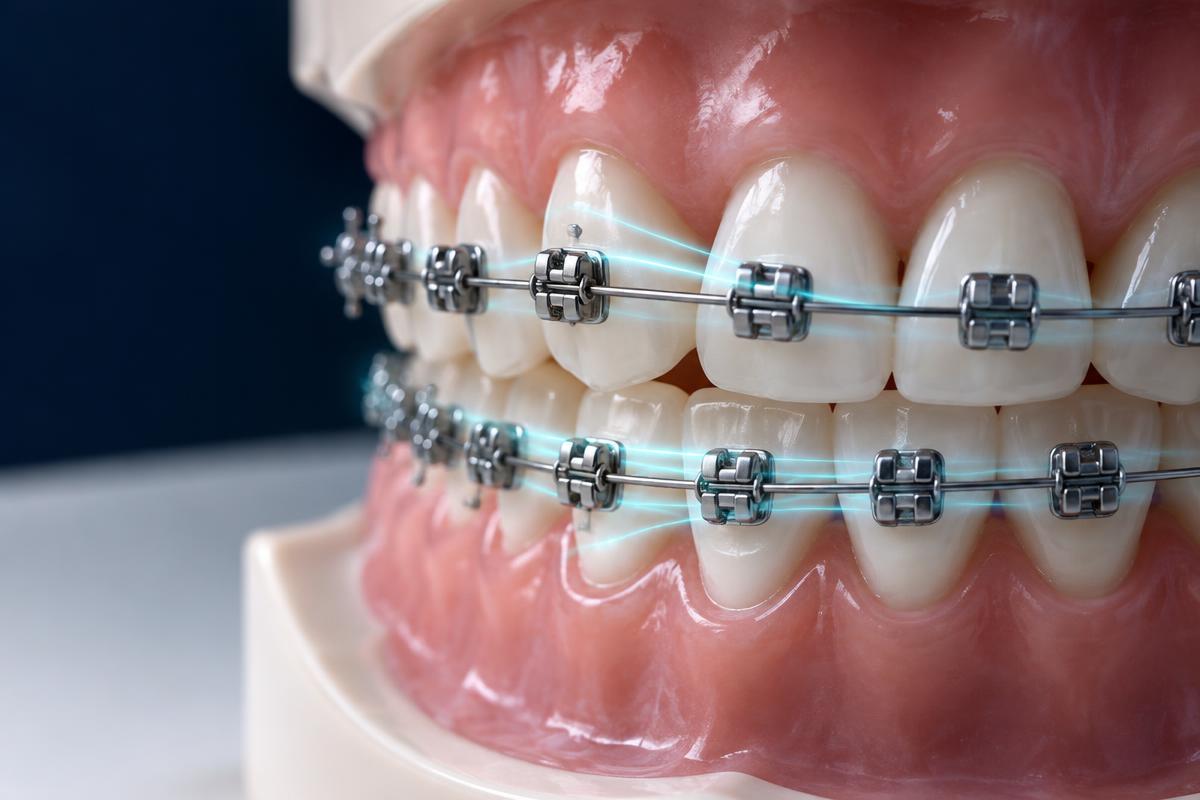
Braces do not pull teeth into place by force. They apply a light, continuous pressure and then rely on the body to do the rest. That distinction explains almost everything else about braces treatment: why it takes months rather than days, why appointments are spaced apart, and why retainers matter afterwards.
The biology behind tooth movement
Each tooth sits in bone, suspended by a thin ligament. When gentle pressure is applied in one direction, bone on that side is gradually resorbed while new bone forms on the opposite side. The tooth moves through the bone rather than simply being bent within it.
This remodelling process cannot be rushed. Excessive force does not speed movement up; it can cause discomfort and is not in the patient's interest. That is why orthodontists use light forces and change them progressively.
What each part of a brace does
Brackets
Small attachments bonded to the front of each tooth. They act as handles, transferring the wire's force to the individual tooth in a controlled direction.
The archwire
The wire threaded through the brackets is the engine of the system. It is manufactured with a shape it wants to return to. When it is tied into misaligned brackets it is deflected, and as it slowly straightens it carries the teeth with it.
Ligatures and modules
The small elastic or metal ties that hold the wire in the bracket slot. These are commonly changed at review appointments.
Elastics
Where the bite needs correcting, elastics may be worn between upper and lower teeth. These depend entirely on the patient wearing them as instructed.
The stages of braces treatment
- Alignment — early wires level and align the teeth.
- Working phase — stronger wires and, where needed, elastics address the bite.
- Detailing — small adjustments refine individual tooth positions.
- Removal — brackets are debonded and the teeth are cleaned and polished.
- Retention — retainers are fitted to help hold the new position.
What treatment feels like
Most people notice tenderness for a few days after fitting and after adjustments, particularly when biting. Soft foods usually help. Cheeks and lips also take a short time to adapt to the brackets. Your orthodontist will give you specific advice, including what to do if something feels sharp.
Why appointments are spaced out
Bone remodelling takes time. Review intervals are set so that each wire or adjustment has the opportunity to do its work before the next change. Attending those appointments as scheduled is one of the most practical things a patient can do to keep treatment on track.
The part patients control
- Thorough cleaning around brackets and along the gumline
- Wearing elastics exactly as instructed
- Avoiding hard and very sticky foods that can damage the appliance
- Attending review appointments
- Reporting breakages promptly rather than waiting
Braces do the mechanical work. Consistency does the rest.
This article is general educational information about dental and orthodontic care. It is not a diagnosis and does not replace a clinical assessment or personalised advice from a qualified clinician.