Braces
Ceramic Braces vs Metal Braces: Which Is Right for You?
Alignora Dental Team · 9 February 2026 · 6 min read
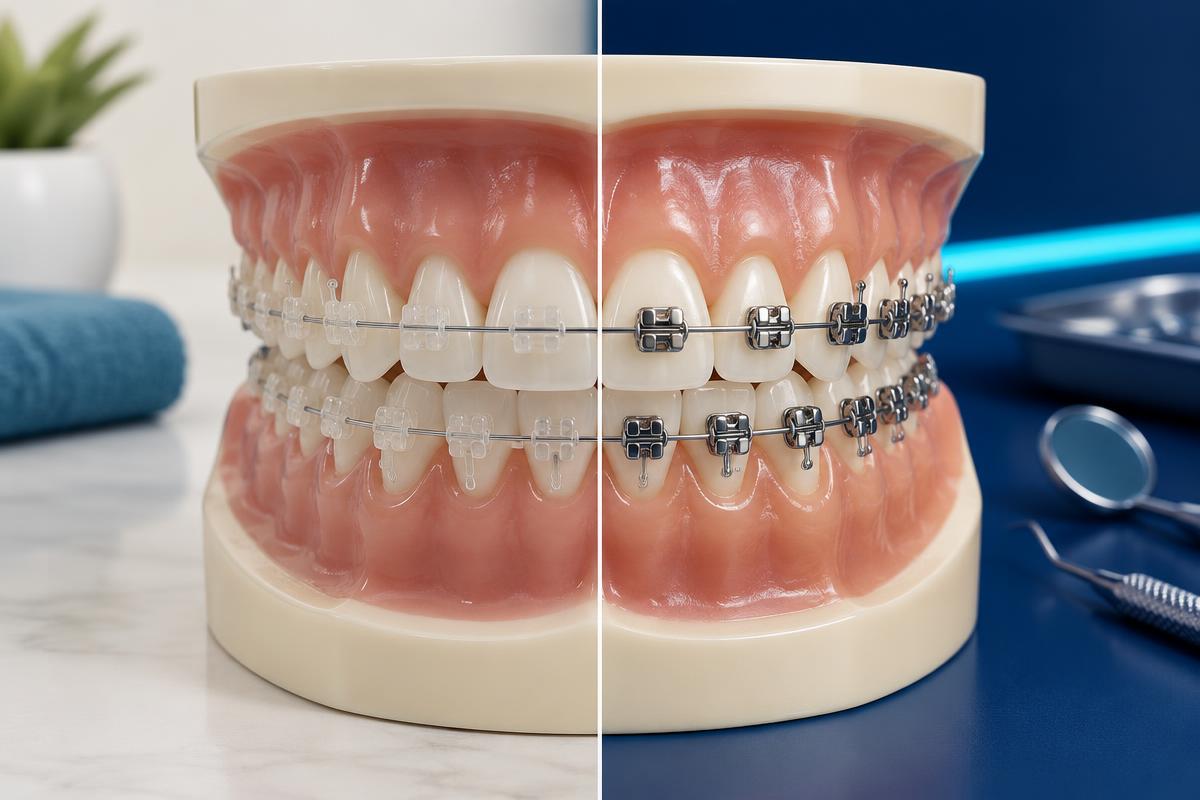
When people are told they need fixed braces, the next question is almost always about how visible they will be. Ceramic and metal brackets are the two most common answers, and the choice is more nuanced than simply picking the discreet option.
What they have in common
Both are fixed appliances. Both use brackets bonded to the teeth and an archwire that guides movement. Both are adjusted at review appointments, and both require careful cleaning. The underlying mechanics are the same.
Appearance
This is the main reason people choose ceramic. The brackets are made in tooth-like shades and are considerably less noticeable at conversational distance. Metal brackets are visible, though modern brackets are smaller than the ones many people remember.
Strength and bracket size
Stainless steel brackets are robust and can be made small. Ceramic brackets are typically slightly bulkier and are more brittle, so they can be more prone to fracture if treated roughly. Your orthodontist will advise if that is a particular consideration in your case.
Staining — the honest version
The ceramic brackets themselves are colour-stable. What can discolour are the small elastic modules holding the wire, particularly with coffee, tea, red wine and strongly coloured foods. Those modules are replaced at review appointments, so any discolouration is temporary rather than permanent.
Which cases suit which
- Adults and older teenagers who want discretion often prefer ceramic.
- Complex bite corrections may favour the robustness of metal brackets.
- Contact-sport participants may be advised toward the more durable option.
- Younger patients are sometimes better suited to metal for practical reasons.
Care differences
Cleaning matters equally for both. With ceramic, patients are usually also advised to be mindful of very hard foods and of strongly pigmented drinks between appointments. Neither system tolerates hard, crunchy or sticky food well.
Making the decision
The best approach is to let the clinical picture narrow the options first, then choose between what remains on appearance and lifestyle. If both are appropriate for your case, appearance is a perfectly legitimate reason to prefer one over the other.
This article is general educational information about dental and orthodontic care. It is not a diagnosis and does not replace a clinical assessment or personalised advice from a qualified clinician.