Children & Teens
Best Age to Visit an Orthodontist for Braces
Alignora Dental Team · 26 January 2026 · 6 min read
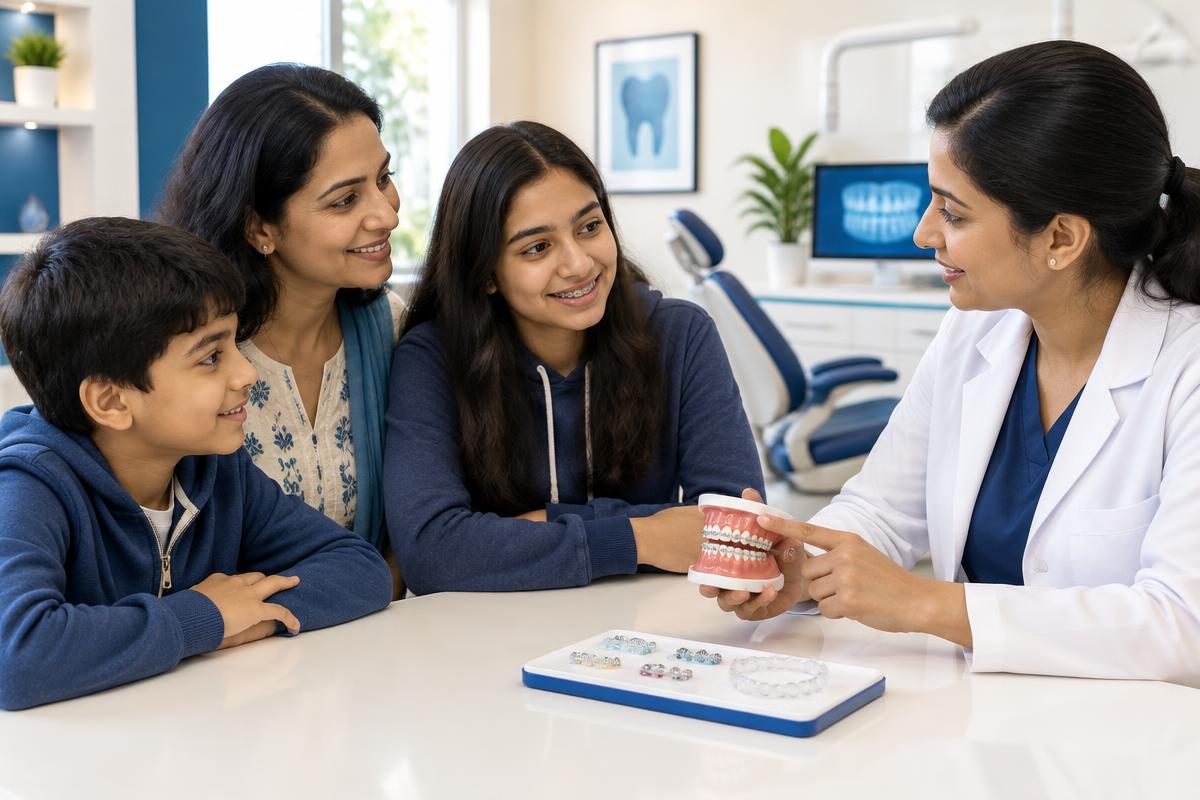
There is no single age at which everyone should have braces. What there is, is a useful window for a first assessment — early enough that development can be observed, and long before most treatment would begin.
Why an early assessment helps
An early orthodontic assessment is not a commitment to treatment. It is a baseline. Once an orthodontist has seen how a child's teeth and jaws are developing, they can tell whether anything needs watching and when the most sensible time to act would be.
In many cases, the recommendation after a first visit is simply to review the child periodically. That is a good outcome, not a wasted appointment.
Signs worth an orthodontic opinion
- Teeth that are visibly crowded or coming through out of position
- Difficulty biting or chewing comfortably
- Front teeth that do not meet, or meet very heavily
- Baby teeth lost much earlier or later than siblings and peers
- A jaw that shifts to one side when closing
- Persistent thumb sucking beyond the early years
None of these automatically mean treatment is needed. They are reasons to have a professional look rather than to worry.
The teenage years
Most orthodontic treatment begins in the teenage years, for a straightforward reason: by then the majority of adult teeth have erupted, so the full picture is visible and can be treated as a whole. Remaining jaw growth can sometimes also be used to help with certain bite corrections.
What about adults?
Adults are treated routinely. Age is not the deciding factor; the health of the teeth, gums and supporting bone is. A healthy adult mouth can be treated at almost any age, and many people begin treatment decades after they first considered it.
A practical answer for parents
If you have noticed something, arrange an assessment rather than waiting for a particular birthday. If nothing is obviously wrong, mention orthodontics at a routine dental check-up and ask whether a referral would be sensible. Either route gets you to the same place: an informed opinion instead of guesswork.
This article is general educational information about dental and orthodontic care. It is not a diagnosis and does not replace a clinical assessment or personalised advice from a qualified clinician.